


'%3e%3cpath%20d='M13.0281%202C14.1531%202.003%2014.7241%202.009%2015.2171%202.023L15.4111%202.03C15.6351%202.038%2015.8561%202.048%2016.1231%202.06C17.1871%202.11%2017.9131%202.278%2018.5501%202.525C19.2101%202.779%2019.7661%203.123%2020.3221%203.678C20.8308%204.17773%2021.2243%204.78247%2021.4751%205.45C21.7221%206.087%2021.8901%206.813%2021.9401%207.878C21.9521%208.144%2021.9621%208.365%2021.9701%208.59L21.9761%208.784C21.9911%209.276%2021.9971%209.847%2021.9991%2010.972L22.0001%2011.718V13.028C22.0025%2013.7574%2021.9948%2014.4868%2021.9771%2015.216L21.9711%2015.41C21.9631%2015.635%2021.9531%2015.856%2021.9411%2016.122C21.8911%2017.187%2021.7211%2017.912%2021.4751%2018.55C21.2243%2019.2175%2020.8308%2019.8223%2020.3221%2020.322C19.8223%2020.8307%2019.2176%2021.2242%2018.5501%2021.475C17.9131%2021.722%2017.1871%2021.89%2016.1231%2021.94L15.4111%2021.97L15.2171%2021.976C14.7241%2021.99%2014.1531%2021.997%2013.0281%2021.999L12.2821%2022H10.9731C10.2433%2022.0026%209.5136%2021.9949%208.78408%2021.977L8.59008%2021.971C8.35269%2021.962%208.11535%2021.9517%207.87808%2021.94C6.81408%2021.89%206.08808%2021.722%205.45008%2021.475C4.78291%2021.2241%204.17852%2020.8306%203.67908%2020.322C3.17003%2019.8224%202.77619%2019.2176%202.52508%2018.55C2.27808%2017.913%202.11008%2017.187%202.06008%2016.122L2.03008%2015.41L2.02508%2015.216C2.00665%2014.4868%201.99831%2013.7574%202.00008%2013.028V10.972C1.99731%2010.2426%202.00465%209.5132%202.02208%208.784L2.02908%208.59C2.03708%208.365%202.04708%208.144%202.05908%207.878C2.10908%206.813%202.27708%206.088%202.52408%205.45C2.77577%204.7822%203.1703%204.17744%203.68008%203.678C4.17923%203.16955%204.78327%202.77607%205.45008%202.525C6.08808%202.278%206.81308%202.11%207.87808%202.06C8.14408%202.048%208.36608%202.038%208.59008%202.03L8.78408%202.024C9.51327%202.00623%2010.2427%201.99857%2010.9721%202.001L13.0281%202ZM12.0001%207C10.674%207%209.40223%207.52678%208.46455%208.46447C7.52686%209.40215%207.00008%2010.6739%207.00008%2012C7.00008%2013.3261%207.52686%2014.5979%208.46455%2015.5355C9.40223%2016.4732%2010.674%2017%2012.0001%2017C13.3262%2017%2014.5979%2016.4732%2015.5356%2015.5355C16.4733%2014.5979%2017.0001%2013.3261%2017.0001%2012C17.0001%2010.6739%2016.4733%209.40215%2015.5356%208.46447C14.5979%207.52678%2013.3262%207%2012.0001%207ZM12.0001%209C12.394%208.99993%2012.7842%209.07747%2013.1482%209.22817C13.5122%209.37887%2013.8429%209.5998%2014.1215%209.87833C14.4002%2010.1569%2014.6212%2010.4875%2014.772%2010.8515C14.9229%2011.2154%2015.0005%2011.6055%2015.0006%2011.9995C15.0006%2012.3935%2014.9231%2012.7836%2014.7724%2013.1476C14.6217%2013.5116%2014.4008%2013.8423%2014.1223%2014.121C13.8437%2014.3996%2013.513%2014.6206%2013.1491%2014.7714C12.7851%2014.9223%2012.395%2014.9999%2012.0011%2015C11.2054%2015%2010.4424%2014.6839%209.87976%2014.1213C9.31715%2013.5587%209.00108%2012.7956%209.00108%2012C9.00108%2011.2044%209.31715%2010.4413%209.87976%209.87868C10.4424%209.31607%2011.2054%209%2012.0011%209M17.2511%205.5C16.9196%205.5%2016.6016%205.6317%2016.3672%205.86612C16.1328%206.10054%2016.0011%206.41848%2016.0011%206.75C16.0011%207.08152%2016.1328%207.39946%2016.3672%207.63388C16.6016%207.8683%2016.9196%208%2017.2511%208C17.5826%208%2017.9005%207.8683%2018.135%207.63388C18.3694%207.39946%2018.5011%207.08152%2018.5011%206.75C18.5011%206.41848%2018.3694%206.10054%2018.135%205.86612C17.9005%205.6317%2017.5826%205.5%2017.2511%205.5Z'%20fill='%23203C89'%3e%3c/path%3e%3c/g%3e%3cdefs%3e%3cclipPath%20id='clip0_3870_96858'%3e%3crect%20width='24'%20height='24'%20fill='white'%3e%3c/rect%3e%3c/clipPath%3e%3c/defs%3e%3c/svg%3e)
SummerProgrammesGuide
What Children Really Learn at an English Summer Camp: Beyond the Language
An English summer camp teaches far more than English. How immersion builds confidence, independence, friendships and soft skills that last a lifetime.
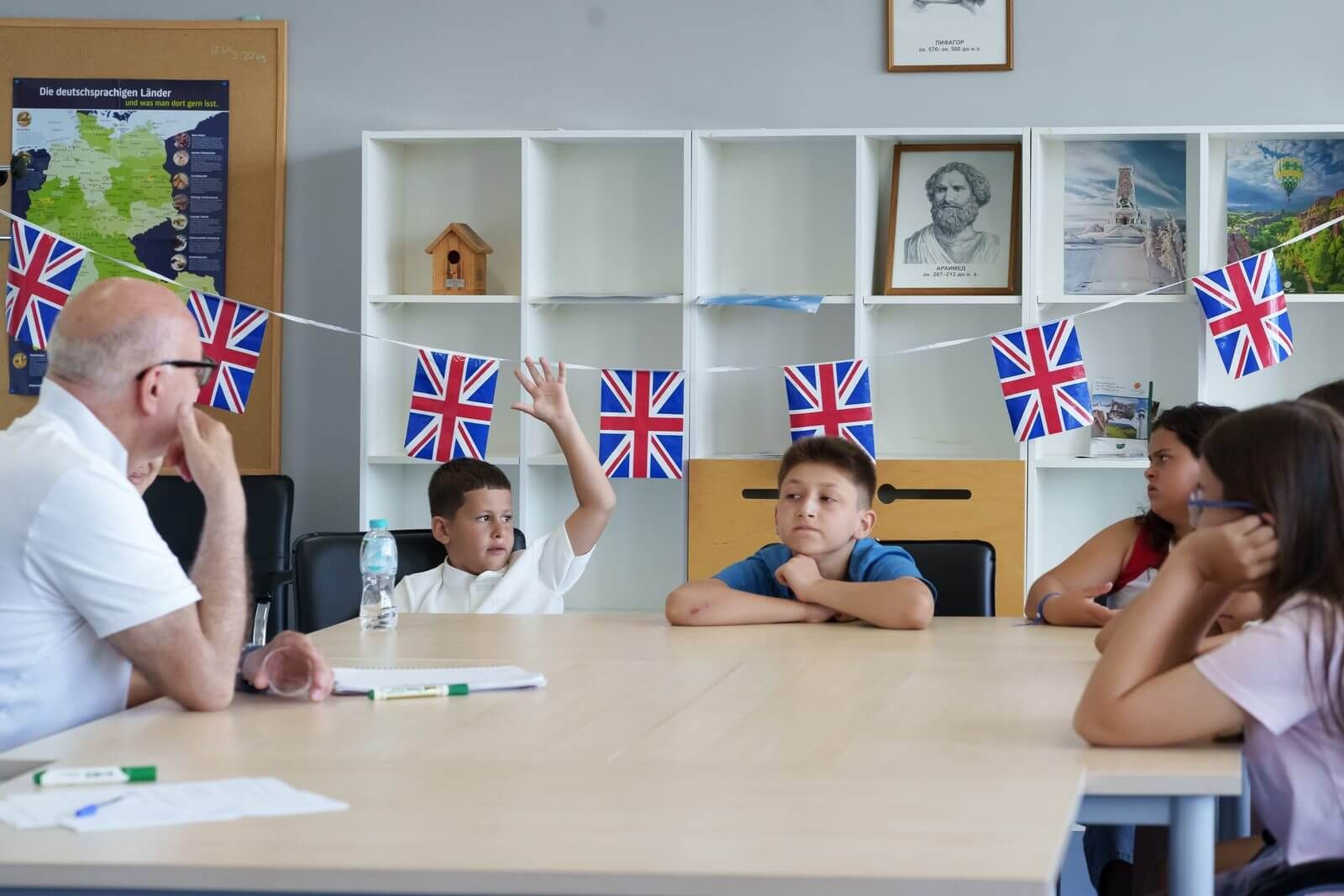
Ask most parents what a child gains from an English summer camp and they will say "better English." That is true, and it matters. But it undersells what actually happens. A good international summer camp is one of the fastest ways a child builds confidence, independence, and the social skills that school rarely teaches. This article looks past the language at everything else a child really learns, and why it is closer to an investment than a holiday.
If you want the wider context first, our Ultimate Guide to International English Summer Camps in Europe explains how these programmes work, and How to Choose the Right English Summer Camp covers what to check before booking.
Why Parents Often Underestimate Summer Camps
There is a common assumption that a summer camp is either childcare with games or a language course with a beach attached. Both miss the point. The benefits of summer camp reach much further than fun or vocabulary. The real value of English immersion is that a child grows up a little, and parents who see camp only as childcare or a language course often undervalue the most important thing their child brings home.
The reason the deeper learning is easy to miss is that it does not look like learning. No one hands out a certificate for "made three friends from other countries" or "sorted out a disagreement without an adult." Yet those are exactly the experiences that build character. A child at an English summer camp is learning constantly, through living independently and solving small real problems, not just through lessons.
This is why the strongest camps describe themselves in terms of personal growth, not only English. The language is the visible result. The confidence, independence, and soft skills underneath it are the ones that shape a child's next ten years. Once you see a camp as experiential learning rather than a class, its real value comes into focus.
English Through Real-Life Communication
The English a child gains at camp is different from the English they get at school, because it is learned by using it. At an English summer camp, English immersion means the language is the tool for daily life, not the subject of a lesson. This kind of language immersion is why children make progress that ordinary lessons rarely match. A child speaks English to join a game, share a room, order lunch, and make a friend, and that constant use is where fluency really comes from.
This matters most for speaking. Many children can read and write English but freeze when they have to talk. In an English speaking environment surrounded by peers from other countries, that freeze fades within days, because everyone is a learner and the goal is being understood. Language immersion turns passive knowledge into active, confident speech.
Formal lessons still play their part, sharpening grammar and vocabulary in the morning. But the leap most parents notice comes from the afternoons and evenings, when the language is used for real. A child who has spent two weeks in this kind of language immersion comes home not just knowing more words, but willing to use them, which is the harder and more valuable skill.
Confidence and Independence Grow Naturally
Away from home, a child has to do things for themselves, and that is where confidence and independence grow. At camp, children make small decisions all day: what to do in free time, how to solve a problem, how to look after their own things. None of it is dramatic, but together it adds up to a child who trusts themselves more.
Independence at a summer camp is safe independence. Children stretch themselves inside a structure that keeps them secure, so they learn to cope without being overwhelmed. A child who was anxious on the first day is often unrecognisable by the last, not because anyone pushed them, but because they proved to themselves that they could manage. That resilience carries straight back into school and home.
Parents see it in the details. A child comes back packing their own bag, speaking up more readily, and handling small setbacks without falling apart. This kind of personal growth is one of the clearest benefits of summer camp, and it is why so many families treat it as an investment in the child, not simply a summer activity. Our guide to what age is best for an international summer camp looks at how this growth changes with age.
Building Friendships Across Cultures
One of the most lasting things a child takes from an international summer camp is a set of friends from around the world. Sharing a room, a table, and a schedule with international students teaches more about other cultures than any classroom can, and it does it through friendship rather than a textbook.
These friendships build real intercultural communication. Children learn to explain themselves clearly to someone who thinks differently, to listen, and to find common ground across language and background. That is where cultural awareness and a genuine global mindset come from, and both are increasingly valued in study and work.
The social skills that grow here are practical and lasting. Teamwork, patience, and everyday diplomacy are learned by doing, in a mixed group where getting along is the only option. Many of these international friendships last for years, and the confidence to connect with people from other countries is a skill a child will use for the rest of their life.
Learning Through Sports, Projects and Creative Activities
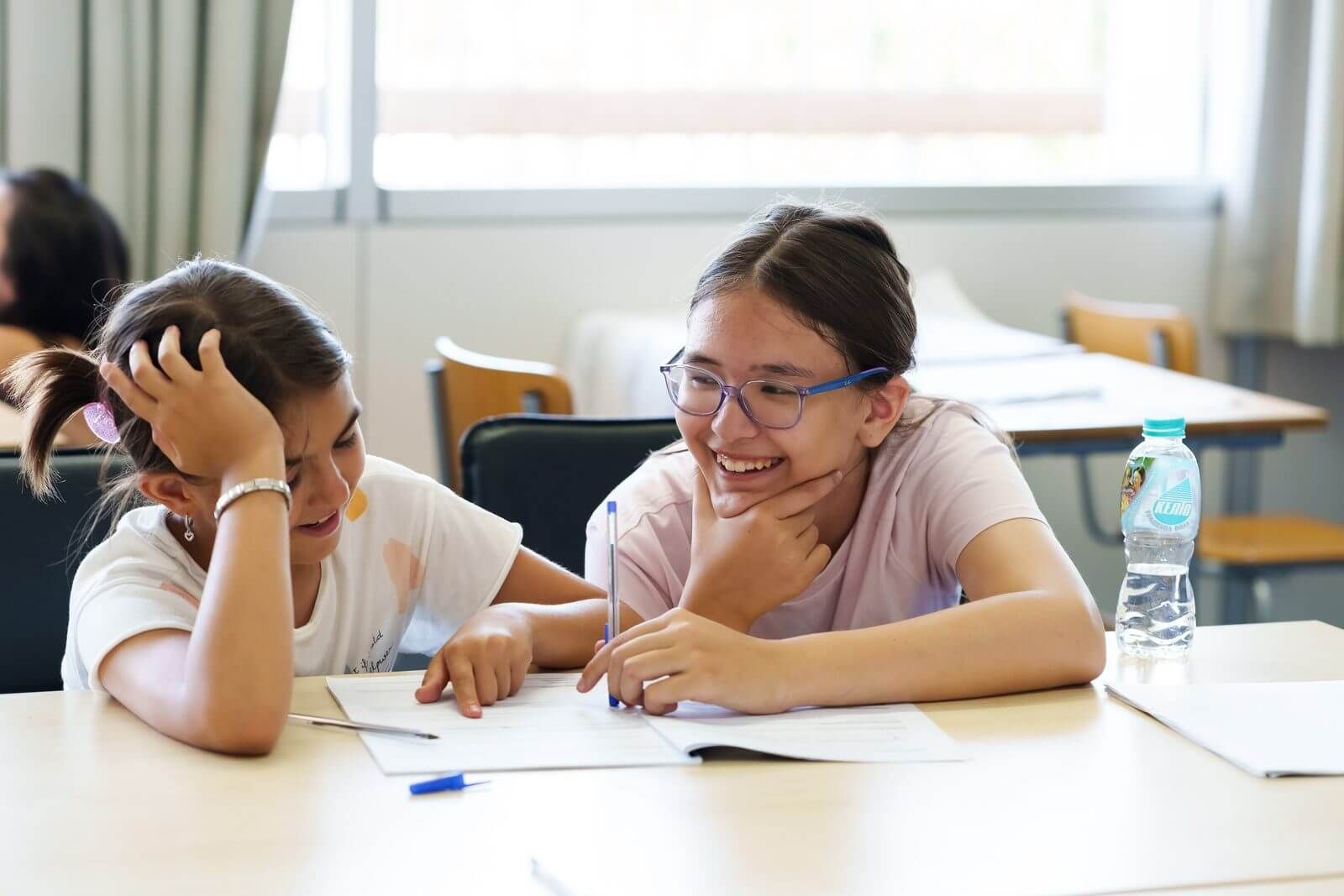
Some of the biggest benefits of summer camp come from outside the classroom, through sport, projects, and creative work. These activities are not filler between English classes. They are where teamwork, problem solving, and creativity are practised for real, in a way that sticks.
Sports activities teach cooperation and resilience: reading a game, working as a team, winning and losing well. Creative workshops in drama, art, film, or music give children another way to express themselves, often in English, and a chance for quieter children to shine. Rehearsing a play or presenting a project builds public speaking and confidence that a worksheet never could.
Educational projects add another layer through project-based and collaborative learning. Working with a team towards a shared goal, children practise planning, dividing roles, and seeing something through, which is active learning at its best. Cultural activities and excursions round it out with a sense of place, and because it all happens in English, the English immersion never stops. Together these experiences build the emotional intelligence and soft skills that shape a capable young person.
Why Academic Quality Still Matters
For all the growth beyond the classroom, the academic core still matters, and it is what separates a serious English summer camp from a pleasant holiday. A strong educational programme gives the whole experience a backbone, so the English progress is real and measurable rather than accidental.
Quality starts with the teachers. Qualified teachers know how to move a shy beginner forward and how to stretch a confident speaker in the same room. A recognised approach, such as an Oxford English programme aligned to the CEFR, means each child is assessed and taught at the right level, and progress is tracked across the stay.
The best camps balance this academic seriousness with everything else. Mornings for focused lessons, afternoons for sport and creativity, evenings for friendship: a rhythm that respects how children learn and keeps them motivated. That balance between study and rest is why children come home having improved their English and enjoyed every day of doing it, a foundation for lifelong learning rather than a burst of summer study.
How VIEC Helps Children Grow Beyond the Classroom
VIEC, the Varna International Education Centre, is an international summer camp built around exactly this idea: that a child should leave with far more than better English. On the Bulgarian Black Sea coast, for children aged 7 to 17, VIEC pairs a serious Oxford English programme and daily English immersion with a full life of sport, creativity, and international friendship.
The academic side runs in partnership with the Oxford International Study Centre, with qualified teachers, CEFR-based lessons, and measurable progress. Around it sits everything that builds the child: a safe, enclosed campus, an international community of students from many countries, careful organisation, and warm staff who look after each child. The daily programme is full but balanced, and parents are kept informed throughout. These are the real benefits of summer camp: a child who comes home more confident, more independent, and more motivated to keep learning.
Families who want to share the experience can stay on campus through the Family Package. To see the programme, the teaching, and the daily life behind this growth, explore the VIEC Summer Camp and the Family Package pages.
Frequently asked questions
More English, but also confidence, independence, teamwork, communication skills, and cultural awareness. The language is the visible result; the personal growth underneath it is often the bigger gain.
Yes. Living in an English speaking environment, and using the language all day through immersion, improves speaking especially, faster than once-a-week lessons at home.
A serious camp is very educational. It combines a real English programme with experiential learning through projects, sport, and daily life in another culture.
Confidence, independence, teamwork, problem solving, communication, resilience, and intercultural understanding, all practised for real rather than taught from a book.
Yes, and shy children often gain the most. A supportive camp with small groups and warm staff helps a quiet child open up, frequently through creative activities.
They build real communication skills, cultural awareness, and a global network, and the confidence to connect with people from other countries lasts for life.
Yes, usually with focused English lessons each morning, balanced with sport, creativity, and rest through the rest of the day.
An international summer camp adds real English immersion, friendships across cultures, and a level of independence that local activities at home cannot match.
Help your child build confidence, improve English and create lifelong memories
See how VIEC combines a serious Oxford English programme with everything a child learns beyond it.