


'%3e%3cpath%20d='M13.0281%202C14.1531%202.003%2014.7241%202.009%2015.2171%202.023L15.4111%202.03C15.6351%202.038%2015.8561%202.048%2016.1231%202.06C17.1871%202.11%2017.9131%202.278%2018.5501%202.525C19.2101%202.779%2019.7661%203.123%2020.3221%203.678C20.8308%204.17773%2021.2243%204.78247%2021.4751%205.45C21.7221%206.087%2021.8901%206.813%2021.9401%207.878C21.9521%208.144%2021.9621%208.365%2021.9701%208.59L21.9761%208.784C21.9911%209.276%2021.9971%209.847%2021.9991%2010.972L22.0001%2011.718V13.028C22.0025%2013.7574%2021.9948%2014.4868%2021.9771%2015.216L21.9711%2015.41C21.9631%2015.635%2021.9531%2015.856%2021.9411%2016.122C21.8911%2017.187%2021.7211%2017.912%2021.4751%2018.55C21.2243%2019.2175%2020.8308%2019.8223%2020.3221%2020.322C19.8223%2020.8307%2019.2176%2021.2242%2018.5501%2021.475C17.9131%2021.722%2017.1871%2021.89%2016.1231%2021.94L15.4111%2021.97L15.2171%2021.976C14.7241%2021.99%2014.1531%2021.997%2013.0281%2021.999L12.2821%2022H10.9731C10.2433%2022.0026%209.5136%2021.9949%208.78408%2021.977L8.59008%2021.971C8.35269%2021.962%208.11535%2021.9517%207.87808%2021.94C6.81408%2021.89%206.08808%2021.722%205.45008%2021.475C4.78291%2021.2241%204.17852%2020.8306%203.67908%2020.322C3.17003%2019.8224%202.77619%2019.2176%202.52508%2018.55C2.27808%2017.913%202.11008%2017.187%202.06008%2016.122L2.03008%2015.41L2.02508%2015.216C2.00665%2014.4868%201.99831%2013.7574%202.00008%2013.028V10.972C1.99731%2010.2426%202.00465%209.5132%202.02208%208.784L2.02908%208.59C2.03708%208.365%202.04708%208.144%202.05908%207.878C2.10908%206.813%202.27708%206.088%202.52408%205.45C2.77577%204.7822%203.1703%204.17744%203.68008%203.678C4.17923%203.16955%204.78327%202.77607%205.45008%202.525C6.08808%202.278%206.81308%202.11%207.87808%202.06C8.14408%202.048%208.36608%202.038%208.59008%202.03L8.78408%202.024C9.51327%202.00623%2010.2427%201.99857%2010.9721%202.001L13.0281%202ZM12.0001%207C10.674%207%209.40223%207.52678%208.46455%208.46447C7.52686%209.40215%207.00008%2010.6739%207.00008%2012C7.00008%2013.3261%207.52686%2014.5979%208.46455%2015.5355C9.40223%2016.4732%2010.674%2017%2012.0001%2017C13.3262%2017%2014.5979%2016.4732%2015.5356%2015.5355C16.4733%2014.5979%2017.0001%2013.3261%2017.0001%2012C17.0001%2010.6739%2016.4733%209.40215%2015.5356%208.46447C14.5979%207.52678%2013.3262%207%2012.0001%207ZM12.0001%209C12.394%208.99993%2012.7842%209.07747%2013.1482%209.22817C13.5122%209.37887%2013.8429%209.5998%2014.1215%209.87833C14.4002%2010.1569%2014.6212%2010.4875%2014.772%2010.8515C14.9229%2011.2154%2015.0005%2011.6055%2015.0006%2011.9995C15.0006%2012.3935%2014.9231%2012.7836%2014.7724%2013.1476C14.6217%2013.5116%2014.4008%2013.8423%2014.1223%2014.121C13.8437%2014.3996%2013.513%2014.6206%2013.1491%2014.7714C12.7851%2014.9223%2012.395%2014.9999%2012.0011%2015C11.2054%2015%2010.4424%2014.6839%209.87976%2014.1213C9.31715%2013.5587%209.00108%2012.7956%209.00108%2012C9.00108%2011.2044%209.31715%2010.4413%209.87976%209.87868C10.4424%209.31607%2011.2054%209%2012.0011%209M17.2511%205.5C16.9196%205.5%2016.6016%205.6317%2016.3672%205.86612C16.1328%206.10054%2016.0011%206.41848%2016.0011%206.75C16.0011%207.08152%2016.1328%207.39946%2016.3672%207.63388C16.6016%207.8683%2016.9196%208%2017.2511%208C17.5826%208%2017.9005%207.8683%2018.135%207.63388C18.3694%207.39946%2018.5011%207.08152%2018.5011%206.75C18.5011%206.41848%2018.3694%206.10054%2018.135%205.86612C17.9005%205.6317%2017.5826%205.5%2017.2511%205.5Z'%20fill='%23203C89'%3e%3c/path%3e%3c/g%3e%3cdefs%3e%3cclipPath%20id='clip0_3870_96858'%3e%3crect%20width='24'%20height='24'%20fill='white'%3e%3c/rect%3e%3c/clipPath%3e%3c/defs%3e%3c/svg%3e)
SummerProgrammesGuide
How to Choose the Right English Summer Camp for Your Child
A practical guide to choosing an English summer camp: 12 questions to ask, warning signs, common mistakes, and a checklist to use before you book.
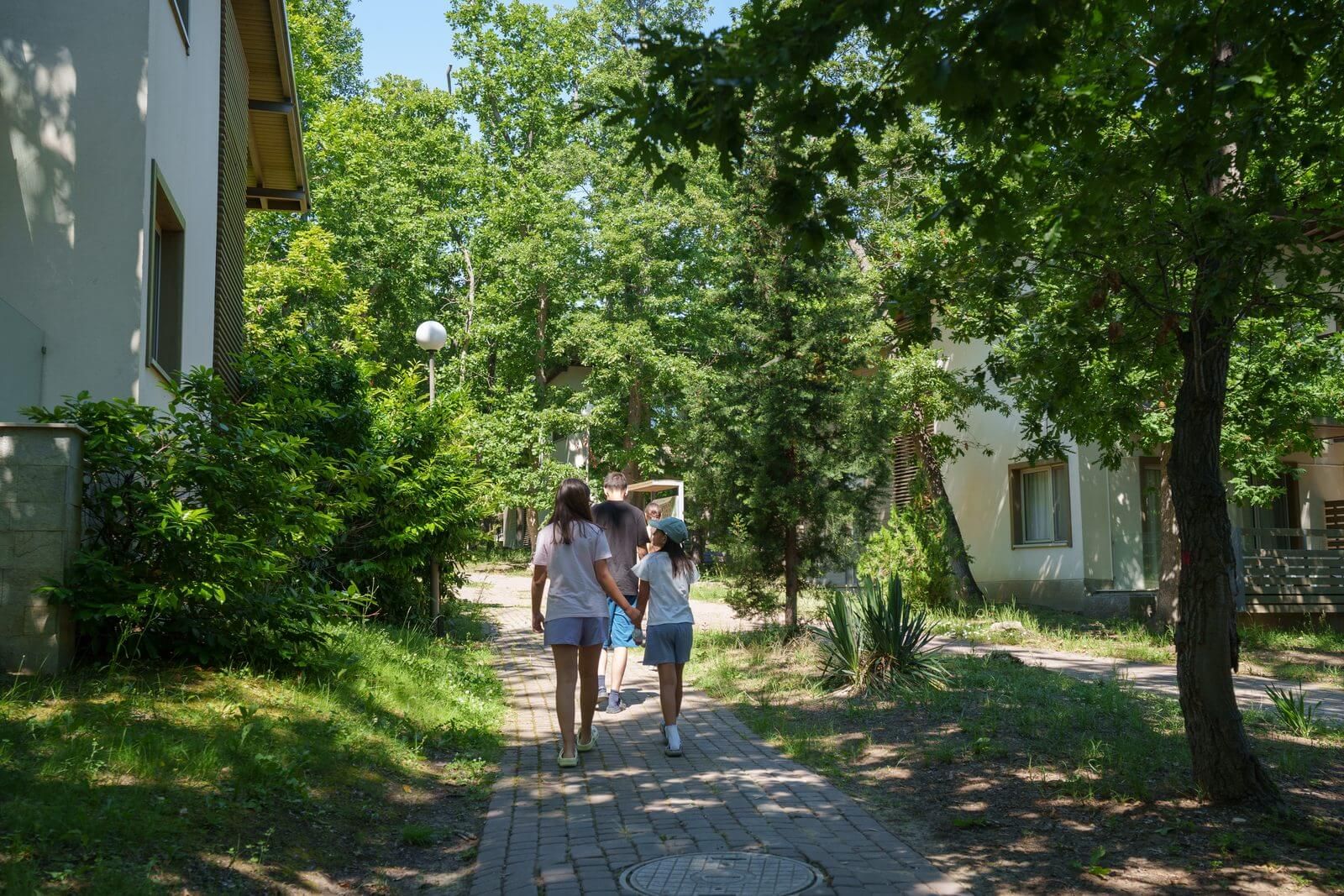
Choosing an English summer camp feels simple until you start comparing options. Two websites can look identical, quote similar prices, and promise the same "unforgettable summer," yet give your child completely different experiences. This guide helps you tell them apart, with a set of questions, warning signs, common mistakes, and a checklist to use before you book any children's summer camp, ours or anyone else's.
You do not need to be an expert. You need to know what to ask and what a good answer sounds like.
Why Choosing the Right Camp Matters
For most families a summer camp is a significant investment of money and, more importantly, of trust. You are sending your child somewhere you cannot see them, often to another country, for two or three weeks. The stakes are higher than a normal purchase, and the differences between programs are larger than they look.
A well-chosen English summer camp can be a turning point: children come home speaking more freely and proud of having managed on their own. A poorly chosen one does the opposite, and the money buys a bad memory rather than a skill. The gap rarely comes down to price. It comes down to the quality of the teaching, the care of the staff, and the seriousness of the program behind the photos.
The problem is that the things that matter most are the hardest to see in a brochure. Anyone can photograph a beach and a smiling group. Few websites tell you the teacher-to-child ratio at 2 a.m., how a fever is handled, or how they stop children from one country grouping together and speaking their own language all day. Those details decide whether an international summer camp actually works.
Time matters too. The best programs fill months in advance, and a decision rushed in spring is how families end up settling. Starting early, with a clear list of questions, lets you compare calmly and choose the best English summer camp for your child, not the one with the last free bed.
12 Questions Every Parent Should Ask
Send these to any camp you are considering. Strong programs answer with specifics; weak ones answer with adjectives.
1. Who teaches the children?
Ask about the qualifications and experience of the teaching staff. You want trained, experienced English teachers, ideally native or near-native speakers, not seasonal students supervising worksheets. Qualified teachers are the biggest driver of what a child learns.
2. What curriculum is used?
Ask whether the English programme follows a recognized framework, such as the CEFR or an approach linked to Oxford English. A real curriculum means goals, structure, and measurement.
3. How are children grouped by level?
Ask how each child is assessed on arrival and how classes are formed. A serious camp tests level and groups accordingly, so beginners are supported and advanced learners are stretched.
4. How much English is actually spoken?
Ask what share of the day runs in English and how they handle nationalities that cluster together. The best camps design the whole day, not just lessons, around an international environment.
5. How are children supervised?
Ask who is on duty in the day, who is awake overnight, and how the buildings are secured. Clear answers here are the foundation of child safety.
6. What happens if a child gets sick?
Ask whether there is medical support on site, how far the nearest hospital is, and exactly how and when parents are told.
7. What are the adult-to-child ratios?
Ask for exact numbers in class, at the pool or beach, and on excursions. Ratios are the clearest single measure of safety and attention.
8. Where and how do children sleep?
Ask how many children share a room, whether boys and girls are housed separately, and how ages are grouped. Accommodation shapes sleep, comfort, and homesickness.
9. How are food and dietary needs handled?
Ask about the daily menu and how allergies, halal, or vegetarian needs are managed.
10. How will you keep me updated?
Ask how, and how often, you will hear about your child, and how quickly you can reach staff. Reliable communication is what lets a parent relax.
11. What does my child take home?
Ask what proves the learning: a CEFR level report, a certificate, a portfolio, or a recorded performance.
12. How long has the camp run, and can I talk to past families?
Ask about track record and references. An established program with reachable past families has far less to hide.

Warning Signs Parents Should Never Ignore
Some answers should stop you. Treat these as red flags for any international summer camp, however attractive the setting.
Vague answers about staff come first. If a camp will not tell you who teaches and what their qualifications are, assume the worst. The same goes for supervision: any hesitation about who is responsible overnight is a serious problem.
Missing numbers come second. A provider that talks about safety in general terms but avoids ratios, distances to medical care, or room sizes has either something to hide or a plan that has not been thought through.
All fun and no substance comes third. If the timetable is a string of activities with a token English lesson, you are buying a holiday. The reverse also warns: lessons from morning to night, with no time to play or rest, will exhaust a child and stall their speaking.
Pressure selling comes fourth. "Only two places left, book today," prices that keep changing, and reluctance to put answers in writing are all reasons to slow down. A confident, quality camp does not need to rush you. And if a camp cannot describe what your child takes home, or point to reviews, you have no way to check its claims.
Mistakes Parents Often Make
Even careful parents make a few predictable mistakes. Knowing them is the easiest way to avoid them.
The first is choosing on price alone. The cheapest option often cuts the invisible things, such as staff quality, ratios, and medical support. The most expensive is not automatically the best; you may be paying for a location or a name. The goal is value: the strongest program you can find for your budget, judged on the checklist.
The second is being won over by photographs. A beautiful beach tells you nothing about the curriculum or the supervision. Use images to picture the setting, then judge the program on its answers.
The third is ignoring the match with your specific child. A shy eight-year-old, a sporty twelve-year-old, and an ambitious sixteen-year-old need different things. Look at age grouping, the balance of activities, and how the program supports a first time away from home.
The fourth is leaving it too late, so the choice is made under pressure from whatever is left. The fifth is skipping the boring questions. Parents often ask about excursions and food but forget night supervision, medical support, or how much English is really spoken. The unglamorous questions are the ones that protect your child.
Checklist Before Booking
Use this as a final filter. If a camp cannot answer each line clearly, keep looking.
| Area | What to confirm | Green light |
|---|---|---|
| Teachers | Qualifications and experience | Trained, experienced English teachers |
| Curriculum | Recognized framework, level testing | CEFR / Oxford English, assessed on arrival |
| English use | Share of day in English | Whole day built around English |
| Ratios | Class, beach/pool, excursions | Exact numbers, given without hesitation |
| Safety | Perimeter and night supervision | Clear, specific arrangements |
| Medical support | On-site care, hospital distance | Staff on site, parents informed fast |
| Accommodation | Room size, boys/girls, ages | Small rooms, separated, age-grouped |
| Food | Menu and dietary needs | Allergies and diets handled properly |
| Communication | Frequency and speed of updates | A clear routine and a fast contact |
| Outcomes | What the child takes home | Level report, certificate, or portfolio |
| Track record | Years running, references | Established, with reachable past families |
How VIEC Meets Every Important Criterion
We wrote this guide to be used against any camp, including ours. Here is how the Varna International Education Centre answers each point, so you can hold us to the same standard.
Teaching is delivered by qualified teachers in partnership with the Oxford International Study Centre, using an Oxford English program aligned to the CEFR. Every child is assessed on arrival and grouped by level from A1 to B2, and the day is built so the English learned in the morning is used all afternoon, in a genuinely international environment.
On child safety, VIEC sits inside a 2,080-acre nature reserve with an enclosed perimeter and CCTV, with counselors on duty and buildings secured overnight. Ratios are roughly one adult to ten in class and tighter at the beach, where a lifeguard is always present. Medical support is on site around the clock, and parents are kept informed through a clear routine with fast access to staff.
Accommodation places children in small rooms, grouped by age, with boys and girls housed separately. Meals cover dietary needs including allergies and halal, and the day mixes English lessons with sport, creative activities, and rest. Children finish with measurable outcomes, and our team answers every question on the checklist, in writing, before you commit.
Discover VIEC Summer Camp
Bring this checklist with you, ask us everything, and compare our answers to anyone else's.