


'%3e%3cpath%20d='M13.0281%202C14.1531%202.003%2014.7241%202.009%2015.2171%202.023L15.4111%202.03C15.6351%202.038%2015.8561%202.048%2016.1231%202.06C17.1871%202.11%2017.9131%202.278%2018.5501%202.525C19.2101%202.779%2019.7661%203.123%2020.3221%203.678C20.8308%204.17773%2021.2243%204.78247%2021.4751%205.45C21.7221%206.087%2021.8901%206.813%2021.9401%207.878C21.9521%208.144%2021.9621%208.365%2021.9701%208.59L21.9761%208.784C21.9911%209.276%2021.9971%209.847%2021.9991%2010.972L22.0001%2011.718V13.028C22.0025%2013.7574%2021.9948%2014.4868%2021.9771%2015.216L21.9711%2015.41C21.9631%2015.635%2021.9531%2015.856%2021.9411%2016.122C21.8911%2017.187%2021.7211%2017.912%2021.4751%2018.55C21.2243%2019.2175%2020.8308%2019.8223%2020.3221%2020.322C19.8223%2020.8307%2019.2176%2021.2242%2018.5501%2021.475C17.9131%2021.722%2017.1871%2021.89%2016.1231%2021.94L15.4111%2021.97L15.2171%2021.976C14.7241%2021.99%2014.1531%2021.997%2013.0281%2021.999L12.2821%2022H10.9731C10.2433%2022.0026%209.5136%2021.9949%208.78408%2021.977L8.59008%2021.971C8.35269%2021.962%208.11535%2021.9517%207.87808%2021.94C6.81408%2021.89%206.08808%2021.722%205.45008%2021.475C4.78291%2021.2241%204.17852%2020.8306%203.67908%2020.322C3.17003%2019.8224%202.77619%2019.2176%202.52508%2018.55C2.27808%2017.913%202.11008%2017.187%202.06008%2016.122L2.03008%2015.41L2.02508%2015.216C2.00665%2014.4868%201.99831%2013.7574%202.00008%2013.028V10.972C1.99731%2010.2426%202.00465%209.5132%202.02208%208.784L2.02908%208.59C2.03708%208.365%202.04708%208.144%202.05908%207.878C2.10908%206.813%202.27708%206.088%202.52408%205.45C2.77577%204.7822%203.1703%204.17744%203.68008%203.678C4.17923%203.16955%204.78327%202.77607%205.45008%202.525C6.08808%202.278%206.81308%202.11%207.87808%202.06C8.14408%202.048%208.36608%202.038%208.59008%202.03L8.78408%202.024C9.51327%202.00623%2010.2427%201.99857%2010.9721%202.001L13.0281%202ZM12.0001%207C10.674%207%209.40223%207.52678%208.46455%208.46447C7.52686%209.40215%207.00008%2010.6739%207.00008%2012C7.00008%2013.3261%207.52686%2014.5979%208.46455%2015.5355C9.40223%2016.4732%2010.674%2017%2012.0001%2017C13.3262%2017%2014.5979%2016.4732%2015.5356%2015.5355C16.4733%2014.5979%2017.0001%2013.3261%2017.0001%2012C17.0001%2010.6739%2016.4733%209.40215%2015.5356%208.46447C14.5979%207.52678%2013.3262%207%2012.0001%207ZM12.0001%209C12.394%208.99993%2012.7842%209.07747%2013.1482%209.22817C13.5122%209.37887%2013.8429%209.5998%2014.1215%209.87833C14.4002%2010.1569%2014.6212%2010.4875%2014.772%2010.8515C14.9229%2011.2154%2015.0005%2011.6055%2015.0006%2011.9995C15.0006%2012.3935%2014.9231%2012.7836%2014.7724%2013.1476C14.6217%2013.5116%2014.4008%2013.8423%2014.1223%2014.121C13.8437%2014.3996%2013.513%2014.6206%2013.1491%2014.7714C12.7851%2014.9223%2012.395%2014.9999%2012.0011%2015C11.2054%2015%2010.4424%2014.6839%209.87976%2014.1213C9.31715%2013.5587%209.00108%2012.7956%209.00108%2012C9.00108%2011.2044%209.31715%2010.4413%209.87976%209.87868C10.4424%209.31607%2011.2054%209%2012.0011%209M17.2511%205.5C16.9196%205.5%2016.6016%205.6317%2016.3672%205.86612C16.1328%206.10054%2016.0011%206.41848%2016.0011%206.75C16.0011%207.08152%2016.1328%207.39946%2016.3672%207.63388C16.6016%207.8683%2016.9196%208%2017.2511%208C17.5826%208%2017.9005%207.8683%2018.135%207.63388C18.3694%207.39946%2018.5011%207.08152%2018.5011%206.75C18.5011%206.41848%2018.3694%206.10054%2018.135%205.86612C17.9005%205.6317%2017.5826%205.5%2017.2511%205.5Z'%20fill='%23203C89'%3e%3c/path%3e%3c/g%3e%3cdefs%3e%3cclipPath%20id='clip0_3870_96858'%3e%3crect%20width='24'%20height='24'%20fill='white'%3e%3c/rect%3e%3c/clipPath%3e%3c/defs%3e%3c/svg%3e)
SummerProgrammesGuide
What Age Is Best for an International Summer Camp?
What age is best for a first international summer camp? A guide to readiness by age, from 7 to 17, and how to tell if your child is ready.
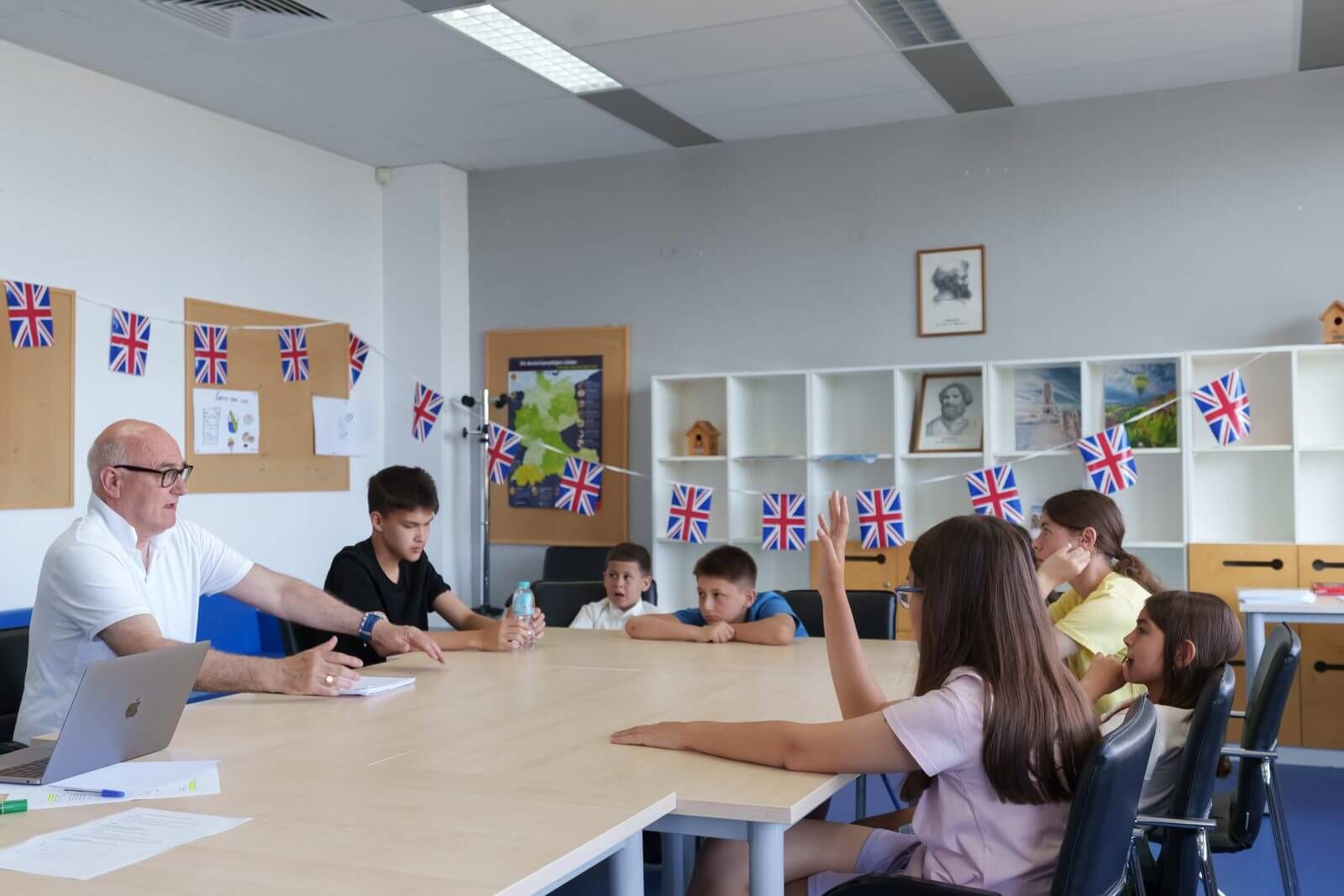
"What is the best age for summer camp?" is one of the questions parents ask most, and the honest answer is that there is no single best age for summer camp. A well-run international summer camp works for a curious seven-year-old and an ambitious sixteen-year-old, because it adapts to each stage. What changes is what a child is ready for, and what they take home. This guide walks through readiness and through each age group, so you can judge the right moment for your child.
If you are still weighing the idea in general, our Ultimate Guide to International English Summer Camps in Europe covers how these programmes work, and How to Choose the Right English Summer Camp covers what to check before you book. This article focuses on one thing: age.
Is Your Child Ready? Signs to Look For
The best age for summer camp has less to do with a number than with readiness, and readiness shows in small, everyday ways. Emotional readiness matters more than age on a form. A child who can spend a night at a friend's house without distress, who can ask an adult for help, and who is curious about new places is usually ready, whether they are eight or fourteen.
Look for a few practical signs. Can your child manage basic self-care, such as dressing, showering, and keeping track of their things, without constant reminders? Can they follow a routine set by someone other than you? Do they recover from small setbacks, a lost game or a scraped knee, without the day falling apart? These are the daily skills a first summer camp asks for, and they matter more than a child's exact English level.
English itself is rarely the barrier. A good English summer camp groups children by level, so a beginner is supported from the first morning, whether you are looking at a summer camp for children or a summer camp for teenagers. The bigger question is social and emotional: is your child ready to be part of a group of international students, to try new things, and to spend time away from home. If the answer is mostly yes, the age is probably right.
It also helps to involve the child in the decision. A child who wants to go, even nervously, does far better than one who feels sent. Excitement, even mixed with butterflies, is the clearest sign of all.
Children Aged 7 to 10: First International Experience
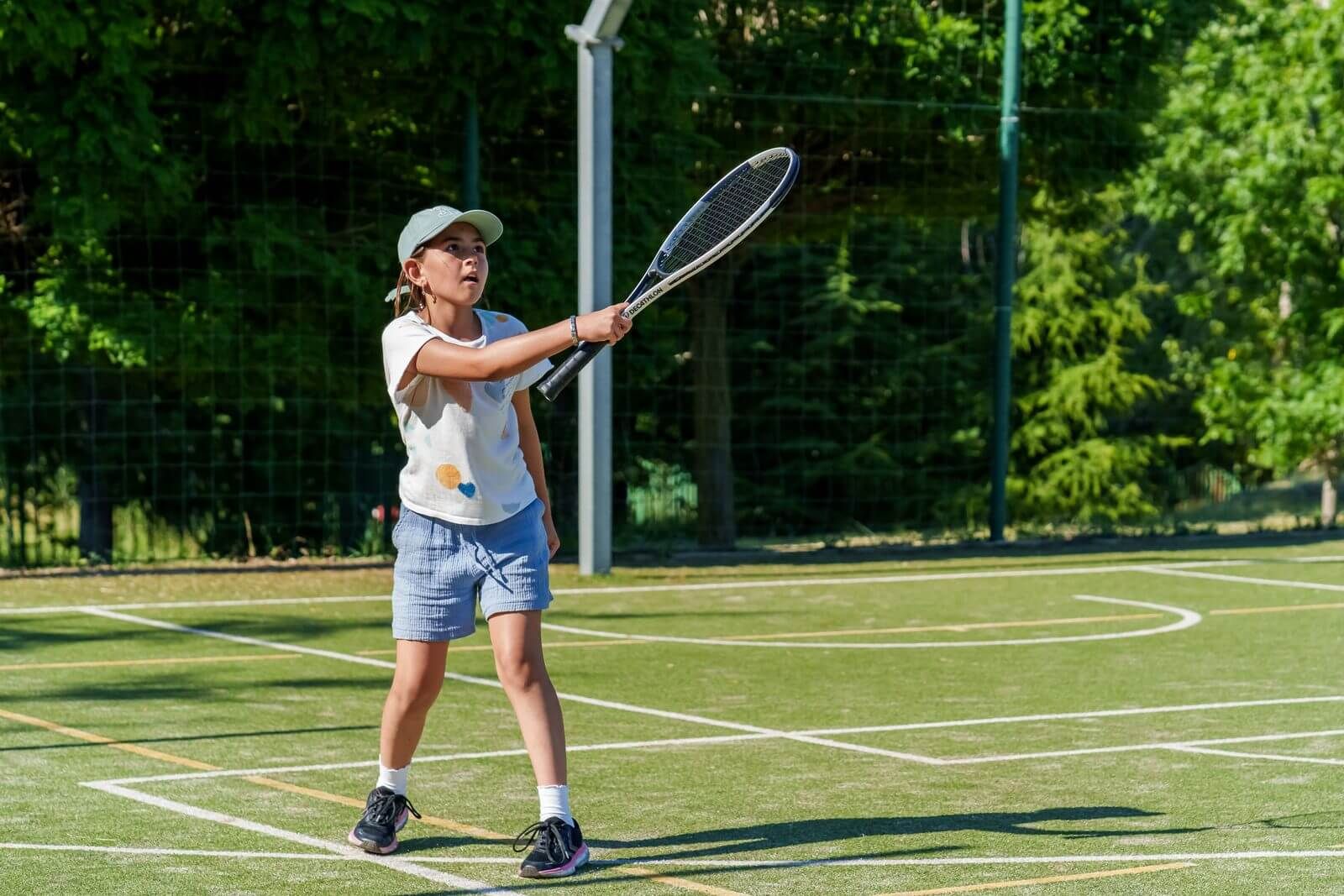
For the youngest campers, a summer camp for children is mostly about a happy, safe first taste of independence. At this age the goal is not fluency or leadership. It is confidence: sleeping away from home, making friends, trying activities, and discovering that the world beyond the family is friendly and manageable.
A summer camp for children this young works best when the structure is warm and clear. They need a predictable daily schedule, plenty of adults close by, and staff who notice quickly when a child is tired or missing home. English immersion at this age happens through play more than study: songs, games, and simple projects mean children absorb the language without feeling they are in a lesson.
A first summer camp at this age plants a seed. Many children who go young come back year after year, because the early experience was positive and low-pressure. The measure of success is simple: did your child feel safe, make a friend, and want to come back. If so, the summer did its job, whatever their English level at the end.
Parents of younger children often prefer to stay close for the first year. That is exactly what the VIEC Family Package allows, so a young child can have their own programme while a parent is a short walk away on the same campus.
Children Aged 11 to 13: Building Independence
The 11 to 13 years are often the sweet spot for a first serious international summer camp. Children this age are old enough to look after themselves and young enough to throw themselves into everything without self-consciousness. Independence grows quickly here, and it is the main prize.
At this stage children can handle a fuller day, deeper English lessons, and real responsibility. They form strong friendships with international students, and they start to use English not as a school subject but as the tool that lets them be part of the group. Confidence and social skills grow alongside the language, because the two are inseparable at a well-run camp.
This is also the age when children begin to notice their own progress. They come home able to hold a conversation they could not hold before, and proud of having managed on their own for two or three weeks. For many families, an English summer camp at 11 to 13 is the point where a child stops being carried through life and starts steering a little of it themselves.
Teenagers 14 to 17: Leadership and Global Friendships
For teenagers, a summer camp becomes about more than English. A summer camp for teenagers is a place to practise leadership, build a global network of friends, and start thinking about a future beyond their own town. The English matters, and it sharpens fast at this level, but the deeper value is what surrounds it.
Teenagers respond to responsibility. Given the chance to lead a team, run a project, or mentor a younger camper, they grow into it, and that experience carries into school, university applications, and interviews. The friendships they make with international students often last for years and become a genuine international network, which is increasingly valuable in study and work.
At this age English immersion also does something specific: it prepares teenagers for study and life in international settings. Many use a strong English summer camp as a stepping stone towards exams, international schools, or universities abroad. The confidence to speak up in a room full of people from other countries is a skill that pays off long after the summer ends.
What If Your Child Is Nervous?
Nerves before a first summer camp are normal, and they are not a reason to wait. Some of the children who gain the most are the ones who felt anxious at the start. The goal is not to remove the nerves but to make sure the camp is set up to carry a child through them.
A few things help. Choose a camp with warm, well-trained staff and small groups, so a nervous child is noticed and supported rather than lost in a crowd. Talk through the worries in advance, and be honest that missing home for a day or two is normal and passes. Let your child pack something familiar. And resist the urge to promise you will collect them at the first sign of doubt, which can turn a passing feeling into a reason to give up.
Ask the camp directly how they handle homesickness and settling in. A good programme has a clear, gentle answer, because they see it every session and know it usually fades within a day or two once friendships form. For very anxious younger children, the reassurance of a parent nearby through the Family Package can turn a hard first step into an easy one. You can also read how safety and pastoral care work in practice on our Summer Camp pages.
Age Group Summary
A quick guide to what each age tends to gain from a summer camp.
| Age | Main focus | What they take home |
|---|---|---|
| 7 to 10 | First taste of independence, English through play | Confidence, a first friend abroad, a happy memory |
| 11 to 13 | Fuller programme, growing independence | Independence, real speaking English, social skills |
| 14 to 17 | Leadership, exams, global friendships | Leadership, an international network, readiness for study abroad |
How VIEC Supports Every Age Group
There is no single best age for summer camp at VIEC. The Varna International Education Centre runs an English summer camp on the Bulgarian Black Sea coast for children aged 7 to 17, and the programme is built to meet each age where it is, from a first summer camp for children to a leadership-focused summer camp for teenagers. Children are grouped by age and by English level, so a young beginner and a confident teenager both learn at the right pace, in the right company.
For the youngest, the focus is a warm, secure first experience, with plenty of staff, a clear routine, and English through play. For 11 to 13s, the day deepens into real lessons and real independence. For teenagers, VIEC adds leadership roles, project work, and the kind of international friendships that last. Across every age, lessons run in partnership with the Oxford International Study Centre, and the day balances study with sport, creativity, and rest.
Families who want to stay close, especially for a young child's first summer, can share the campus through the Family Package. To see the age-appropriate options, dates, and daily programme, explore the VIEC Summer Camp, and read about the campus and rooms on the Accommodation pages.
Explore our age-appropriate summer programmes
From a gentle first camp at 7 to leadership at 17, see how VIEC fits your child's age.