


'%3e%3cpath%20d='M13.0281%202C14.1531%202.003%2014.7241%202.009%2015.2171%202.023L15.4111%202.03C15.6351%202.038%2015.8561%202.048%2016.1231%202.06C17.1871%202.11%2017.9131%202.278%2018.5501%202.525C19.2101%202.779%2019.7661%203.123%2020.3221%203.678C20.8308%204.17773%2021.2243%204.78247%2021.4751%205.45C21.7221%206.087%2021.8901%206.813%2021.9401%207.878C21.9521%208.144%2021.9621%208.365%2021.9701%208.59L21.9761%208.784C21.9911%209.276%2021.9971%209.847%2021.9991%2010.972L22.0001%2011.718V13.028C22.0025%2013.7574%2021.9948%2014.4868%2021.9771%2015.216L21.9711%2015.41C21.9631%2015.635%2021.9531%2015.856%2021.9411%2016.122C21.8911%2017.187%2021.7211%2017.912%2021.4751%2018.55C21.2243%2019.2175%2020.8308%2019.8223%2020.3221%2020.322C19.8223%2020.8307%2019.2176%2021.2242%2018.5501%2021.475C17.9131%2021.722%2017.1871%2021.89%2016.1231%2021.94L15.4111%2021.97L15.2171%2021.976C14.7241%2021.99%2014.1531%2021.997%2013.0281%2021.999L12.2821%2022H10.9731C10.2433%2022.0026%209.5136%2021.9949%208.78408%2021.977L8.59008%2021.971C8.35269%2021.962%208.11535%2021.9517%207.87808%2021.94C6.81408%2021.89%206.08808%2021.722%205.45008%2021.475C4.78291%2021.2241%204.17852%2020.8306%203.67908%2020.322C3.17003%2019.8224%202.77619%2019.2176%202.52508%2018.55C2.27808%2017.913%202.11008%2017.187%202.06008%2016.122L2.03008%2015.41L2.02508%2015.216C2.00665%2014.4868%201.99831%2013.7574%202.00008%2013.028V10.972C1.99731%2010.2426%202.00465%209.5132%202.02208%208.784L2.02908%208.59C2.03708%208.365%202.04708%208.144%202.05908%207.878C2.10908%206.813%202.27708%206.088%202.52408%205.45C2.77577%204.7822%203.1703%204.17744%203.68008%203.678C4.17923%203.16955%204.78327%202.77607%205.45008%202.525C6.08808%202.278%206.81308%202.11%207.87808%202.06C8.14408%202.048%208.36608%202.038%208.59008%202.03L8.78408%202.024C9.51327%202.00623%2010.2427%201.99857%2010.9721%202.001L13.0281%202ZM12.0001%207C10.674%207%209.40223%207.52678%208.46455%208.46447C7.52686%209.40215%207.00008%2010.6739%207.00008%2012C7.00008%2013.3261%207.52686%2014.5979%208.46455%2015.5355C9.40223%2016.4732%2010.674%2017%2012.0001%2017C13.3262%2017%2014.5979%2016.4732%2015.5356%2015.5355C16.4733%2014.5979%2017.0001%2013.3261%2017.0001%2012C17.0001%2010.6739%2016.4733%209.40215%2015.5356%208.46447C14.5979%207.52678%2013.3262%207%2012.0001%207ZM12.0001%209C12.394%208.99993%2012.7842%209.07747%2013.1482%209.22817C13.5122%209.37887%2013.8429%209.5998%2014.1215%209.87833C14.4002%2010.1569%2014.6212%2010.4875%2014.772%2010.8515C14.9229%2011.2154%2015.0005%2011.6055%2015.0006%2011.9995C15.0006%2012.3935%2014.9231%2012.7836%2014.7724%2013.1476C14.6217%2013.5116%2014.4008%2013.8423%2014.1223%2014.121C13.8437%2014.3996%2013.513%2014.6206%2013.1491%2014.7714C12.7851%2014.9223%2012.395%2014.9999%2012.0011%2015C11.2054%2015%2010.4424%2014.6839%209.87976%2014.1213C9.31715%2013.5587%209.00108%2012.7956%209.00108%2012C9.00108%2011.2044%209.31715%2010.4413%209.87976%209.87868C10.4424%209.31607%2011.2054%209%2012.0011%209M17.2511%205.5C16.9196%205.5%2016.6016%205.6317%2016.3672%205.86612C16.1328%206.10054%2016.0011%206.41848%2016.0011%206.75C16.0011%207.08152%2016.1328%207.39946%2016.3672%207.63388C16.6016%207.8683%2016.9196%208%2017.2511%208C17.5826%208%2017.9005%207.8683%2018.135%207.63388C18.3694%207.39946%2018.5011%207.08152%2018.5011%206.75C18.5011%206.41848%2018.3694%206.10054%2018.135%205.86612C17.9005%205.6317%2017.5826%205.5%2017.2511%205.5Z'%20fill='%23203C89'%3e%3c/path%3e%3c/g%3e%3cdefs%3e%3cclipPath%20id='clip0_3870_96858'%3e%3crect%20width='24'%20height='24'%20fill='white'%3e%3c/rect%3e%3c/clipPath%3e%3c/defs%3e%3c/svg%3e)
SummerProgrammesGuide
Ultimate Guide to International English Summer Camps in Europe (2026)
A complete 2026 guide to international English summer camps in Europe: how immersion works, how to choose a camp, and what strong programs have in common.
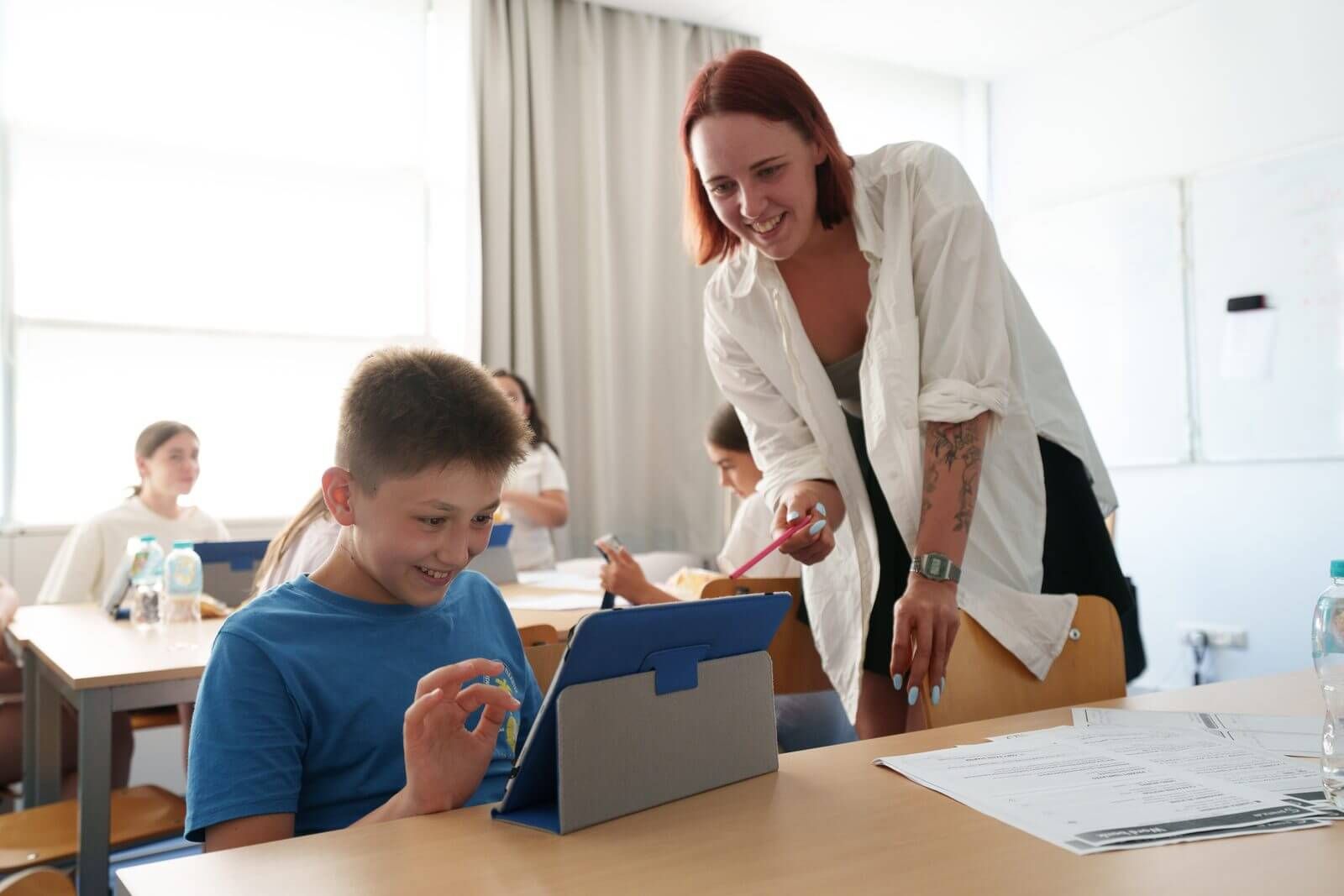
Every summer, thousands of families ask the same thing: how can my child improve their English, make friends from other countries, and come home more confident? For many parents the answer is an international English summer camp in Europe. This guide explains what these programs are, how immersion works, how to judge quality, and how to choose the right camp in 2026, whether or not you ever contact us.
We have run international programs for children for years, and the difference between a good summer and a forgettable one usually comes down to a handful of things any parent can check. By the end you will know what to look for, what to avoid, and what a strong English summer camp should be able to prove.
What Is an International English Summer Camp?
An international English summer camp is a residential program, usually two to four weeks long, where children from many countries live together and learn English through a mix of lessons and daily life. The word "international" is the point. Children of different nationalities share no common language except English, so English becomes the practical tool they use to make friends, play sport, and get through the day.
Most programs follow the same shape: structured English lessons in the morning, activities in the afternoon, social time in the evening. Children are grouped by age and by language level, so a beginner is never lost and an advanced speaker is never bored. The better providers align teaching with the CEFR, the framework that describes ability from A1 to C2, so progress can be measured rather than assumed.
This is why so many families now choose to study English abroad rather than at home. In a local class, a child switches back to their first language the moment the lesson ends. At an international English summer camp there is no switch to flip: the child who wants to join the game, order lunch, or share a room does it in English. That constant, low-pressure use is what turns a school subject into a real skill.
An English summer camp is also more than language. It is a short course in independence: a child packs their own bag, keeps their own schedule, settles small disagreements, and tries things they would never try at home. Parents often book for the English and come back for the confidence.
Benefits of Learning English Through Immersion
Children do not learn a language mainly by memorizing rules. They learn it by needing it. Language immersion creates dozens of small, real moments each day when English is the only way to get something a child wants: a turn in a game, a seat next to a new friend, help finding the dining hall. There are far more of those moments in a day of immersion than in a week of textbook study.
Speaking improves first. Many children arrive able to read and write English but freeze when they have to speak. Within a few days that hesitation fades, because everyone is a learner, mistakes are normal, and the goal is being understood, not being perfect. The change parents notice most is willingness: their child speaks, where before they stayed quiet.
Confidence follows. A child who asks for something in English and is understood gets proof that they can do it. Repeated over two weeks, that proof becomes a new self-image, and it tends to outlast the specific words learned.
Immersion also builds friendships and the skills that come with them. Sharing a room and a schedule with children from other countries teaches communication skills, patience, and how to find common ground with someone whose background is nothing like yours. Those life skills are exactly what schools struggle to teach and what universities and employers look for.
Finally, immersion is efficient. A focused two or three week English language camp can deliver more usable spoken English than a full term of once-a-week lessons, because the hours are concentrated and the motivation is real. It does not replace school English; it accelerates it, and it often fixes the one thing school cannot: speaking under pressure.
How to Choose the Right Summer Camp
Programs are not equal, and the differences rarely show on a website. Use this checklist when you compare any international summer camp. A strong provider answers every point clearly; a vague answer is itself an answer.
- Teacher qualifications. Who teaches the English lessons, and what are their qualifications? Look for trained, experienced teachers, not students on a summer job.
- Curriculum and level testing. How are children assessed on arrival and grouped into classes? A quality camp tests level against the CEFR and teaches to it.
- How much English is spoken. What share of the day runs in English, and how do they stop children clustering by nationality?
- Adult-to-child ratios. Ask for exact numbers in class, at the beach, and on excursions.
- Safety and supervision. What is the perimeter, and who is awake and on duty overnight?
- Medical cover. Is there medical staff on site, how far is the nearest hospital, and how are parents told?
- Accommodation. How many children share a room, are boys and girls separated, and how are ages grouped?
- Food and dietary needs. How are allergies, halal, and vegetarian diets handled?
- Balance. Ask for a sample timetable. Look for lessons, sport, creative activities, and rest in proportion.
- Parent communication. How, and how often, will you hear about your child?
- Outcomes. What does the child take home: a level report, certificate, or portfolio?
- Track record. How long has the program run, and can you speak to past families?
One rule of thumb: a good children's summer camp welcomes hard questions. Numbers, names, and specifics mean you are usually in safe hands. Soft, general answers mean keep looking. See also our summer camp programme for how VIEC answers each point in practice.
Academic Quality: Why Curriculum Matters
The biggest gap between an average camp and an excellent one is the academic engine underneath it. Activities and sunshine are easy to arrange. A serious curriculum, taught by qualified teachers, is not, and it is what turns a pleasant holiday into real progress.
Start with the teachers. Language teaching is a craft: knowing how to get a shy beginner talking, how to correct without discouraging, how to move a mixed group forward together. Their qualifications and experience decide most of what a child actually learns.
Then the method. A recognized approach makes progress deliberate. Programs built on established standards, such as Oxford English and the wider tradition of British language teaching, test each child on arrival, set goals, and measure movement across the stay. Bodies like the Oxford International Study Centre exist to hold programs to that standard. You do not need the acronyms; you need to confirm the camp teaches to a framework and can show you where your child started and finished.
Finally, connect the classroom to the day. The strongest programs make sure the English learned in the morning is used in the afternoon, so a lesson on directions becomes a treasure hunt and a lesson on persuasion becomes a debate. That link is where language sticks.
Life Beyond the Classroom
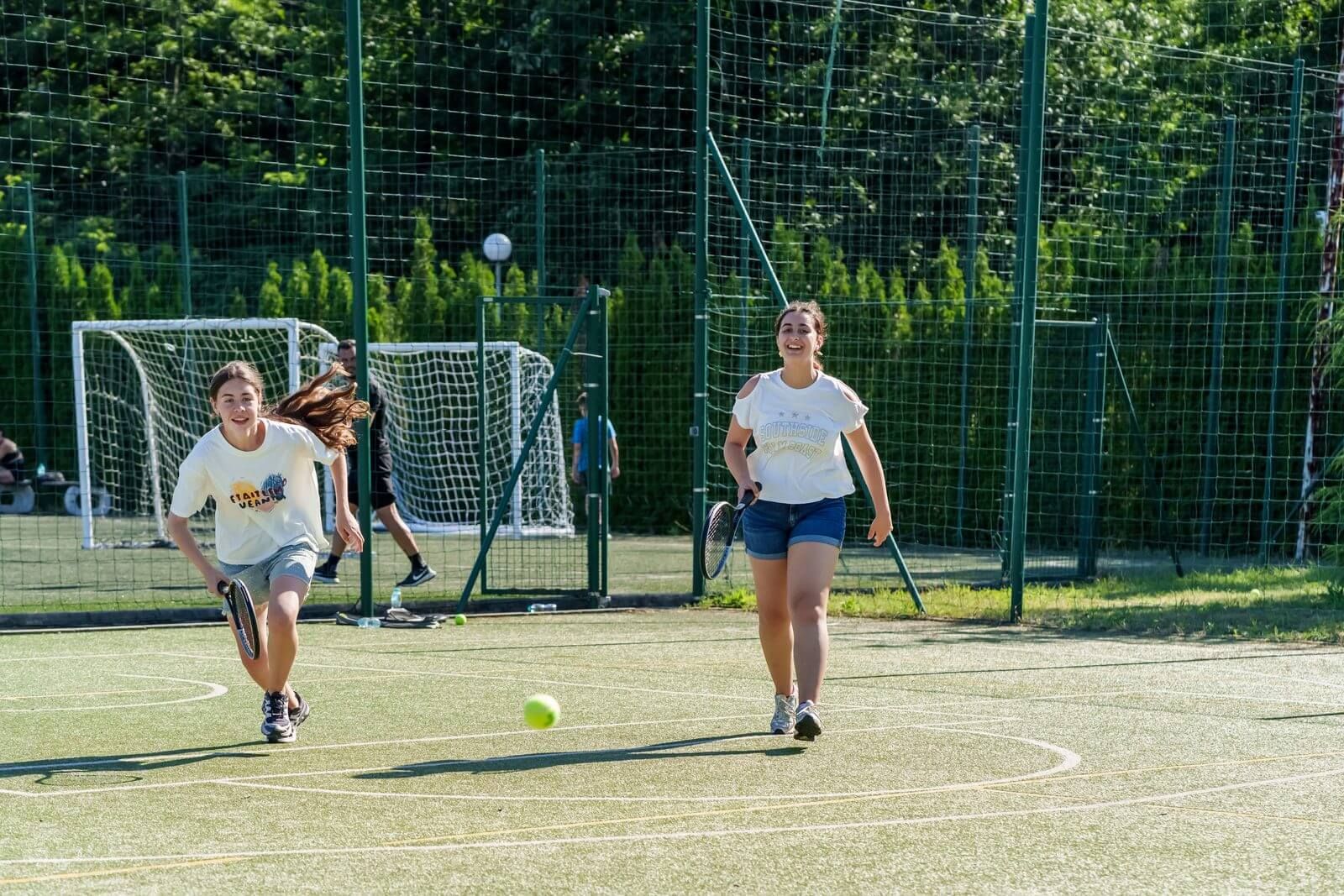
Language is the reason most families book, but the afternoons and evenings are where a summer becomes memorable, and where much of the growth happens. A good international summer camp fills the time beyond lessons with sport, creative workshops, and projects that keep children using English all day.
Sports activities suit language learning, because a game needs constant, simple communication: call for the ball, agree the rules, celebrate a goal. Many camps let children pick a focus, and some go deeper into a single sport. If your child is serious about one game, check whether a camp offers a dedicated pathway, such as a structured football programme.
Creative workshops give quieter children another way to shine. Rehearsing a play, editing a short film, or presenting a project all demand real language used for a real purpose. Cultural activities and excursions add a sense of place, so "study English abroad" becomes concrete memories attached to concrete words. Many programs also hand children small responsibilities and team roles, which builds the independence and leadership parents value long after the vocabulary fades.
The takeaway for parents comparing camps: look at the whole day, not just the timetable of lessons. A summer camp Europe families remember is one where every part of the day keeps children active and speaking.
Why Europe Is the Best Destination
Families can send a child to study English almost anywhere, so why choose a summer camp Europe option specifically? The mix of quality, safety, variety, and value is hard to match.
Europe has an unusually dense concentration of high-quality programs within short, safe travel distances. A family in the Gulf, Central Asia, or another European country can reach a European coast in a few hours, which keeps a first trip simple. A long tradition of international education keeps teaching standards high, and the mix of nationalities at a European English language camp is genuinely global, which is what makes immersion work.
Each classic destination has a character. The UK and Ireland offer the prestige of an English-speaking country, at the highest prices. Malta pairs English with a Mediterranean holiday in the mid-to-upper range. Switzerland is premium in every sense. The Mediterranean and Black Sea coasts, including Spain, Italy, and Bulgaria, offer sun, sea, and strong programs, often at a lower price for comparable quality.
For many families the coast decides it. A seaside international summer camp pairs serious lessons with beach time and water sports, which keeps motivation high across two or three weeks. The Black Sea coast in particular has become popular for warm, calm summers, safe beaches, and modern facilities at a fraction of Western European prices. Compare destinations in practice on our summer camp page.
Why Families Choose VIEC
Everything above is how we think any parent should judge a program, and it is the standard we hold ourselves to. VIEC, the Varna International Education Centre, is an international English summer camp on the Bulgarian Black Sea coast, 40 km from Varna Airport, for children aged 7 to 17. It combines a serious Oxford English program with the freedom of a coastal summer in one secure place.
The academic program runs in partnership with the Oxford International Study Centre, with qualified teachers and lessons grouped by CEFR level from A1 to B2, so every child is taught at the right level and progress is measured. Mornings are for English; afternoons move to the beach, sport, and creative workshops, so the language learned in class is used the same day. Children can follow English with leadership, English with sport, English with AI arts, or a dedicated football pathway.
The setting is a 2,080-acre nature reserve with an enclosed perimeter, CCTV, and medical staff on site around the clock. Children are grouped by age, share rooms of three, and are supervised at roughly one adult to ten in class, tighter at the beach where a lifeguard is always present. What parents mention most is the combination: an Oxford program, careful organization, clear communication, a safe environment, an international community, and a wide range of activities that build confidence and independence.
Families who want to stay close can share the campus through the VIEC Family Package, and children who live for the game can join the football academy. Whichever route a family takes, the aim is the same: a child who leaves more capable, more confident, and more independent than when they arrived.
See how it works in practice
Explore the programme, dates, and facilities, and ask us every question on the checklist above.